
TNW Corp. announces leadership transition
Rail consultant returns to lead South Carolina short line
Colorado’s most scenic train rides, from historic steam locomotives to luxury dome cars
Railroad members! If you want to be featured in this section, please email us the link. You can also tag us (@ASLRRA) in your social media posts. Interested in seeing your railroad showcased in your local newspaper? Contact Amy Krouse for assistance.
America’s agriculture industry is a big business, but it’s the small railroads that keep these companies connected to the national and global marketplace. The work of two ASLRRA members, Genesee & Wyoming Inc.’s Grand Rapids Eastern Railroad (GR) and Georgia Southwestern Railroad (GSWR), shows how short lines play a vital role in connecting businesses across the agricultural supply chain.
For King Milling, a plan to add a fourth flour mill at their Lowell, Michigan facility meant working with GR to improve rail service. With a grant from the Michigan Department of Transportation Rail Enhancement Program, GR rehabilitated track from Grand Rapids to Lowell and made changes to track configuration at the Lowell facility, further enhancing operational efficiency.
Track conditions between Grand Rapids and Lowell had previously necessitated a 10-mph slow order. GR made upgrades that restored track speed to 25 mph. The railroad also installed a new equipment defect detector that can identify overheated wheel bearings, derailed cars and dragging equipment.
At the King Milling site, GR worked with the company to improve unloading operations. Previously, a single-pocket unloading pit meant fully unloading a railcar required it to be repositioned multiple times. A three-pocket unloading pit was constructed instead, allowing the same railcar to be unloaded all at once, a significant time reduction.
Building a new, larger unloading pit meant further infrastructure work. Two turnouts were removed and a new one installed to connect an existing stub track to the facility. A grade crossing surface also needed to be reconstructed to accommodate these changes.
Completion of this project has led to a 30% increase in shipments to King Milling, an additional 450 carloads per year. The company now produces 800,000 pounds of flour a day, accounting for roughly half of Michigan’s flour-milling capacity.
Infrastructure upgrades not only boosted business by enabling more product to reach King Milling’s facility, they also helped lower costs. Increased speeds along state-of-good-repair track reduces train delays, diesel fuel consumption and defect repair, resulting in an estimated expense reduction of $95,000 per year.
But all these benefits are hardly limited to one company. Other customers along GR’s upgraded line will gain by having improved shipping efficiency. King Milling’s expansion supports local businesses, such as Michigan’s wheat farmers, and adds jobs. For community members, better track means shorter waiting times at public grade crossings, while a new defect detector improves public safety and lower fuel consumption reduces sulfur dioxide and carbon dioxide emissions.
Though GR and King Milling were focused on building the capacity for intrastate shipments, GSWR needed to complete a project that would get cottonseed across the country, from a facility in Georgia to a company in California.
Fresno-based Penny Newman Grain Company was looking for a site in Georgia to expand their cottonseed business. Through strategic partnerships with local economic development corporations and Class I railroads, GSWR helped identify a suitable place for Penny Newman’s new processing and distribution facility.
GSWR received grant funding from the state of Georgia and the Georgia Department of Transportation to complete a siding project for the facility. GSWR also worked extensively with CSX to ensure the interchange and cross-country shipments would move smoothly.
Getting product to market quickly was a priority. Construction started in July 2025 and the first unit train was loaded and shipped in December. Despite severe summer storms and heavy rainfall that threatened to delay the project, the GSWR team pushed through and kept everything on schedule.
This project helps strengthen the regional supply chain and improve local economic growth. Penny Newman estimates it will move 1,800 carloads of cottonseed annually, with the new facility supporting 10 full-time jobs and cotton producers across the region.
For nearly as many years as they’ve been around, railroads have shipped agricultural products for America’s farmers and ranchers. That partnership has grown with the respective industries, and rail continues to offer companies a safe, reliable way to get raw materials and finished products back and forth from producer to manufacturer to customer.
Both King Milling and Penny Newman have been in business since the late 1800s and they are still growing. ASLRRA’s short line railroad members help support that growth, in turn supporting economic development locally and nationwide.
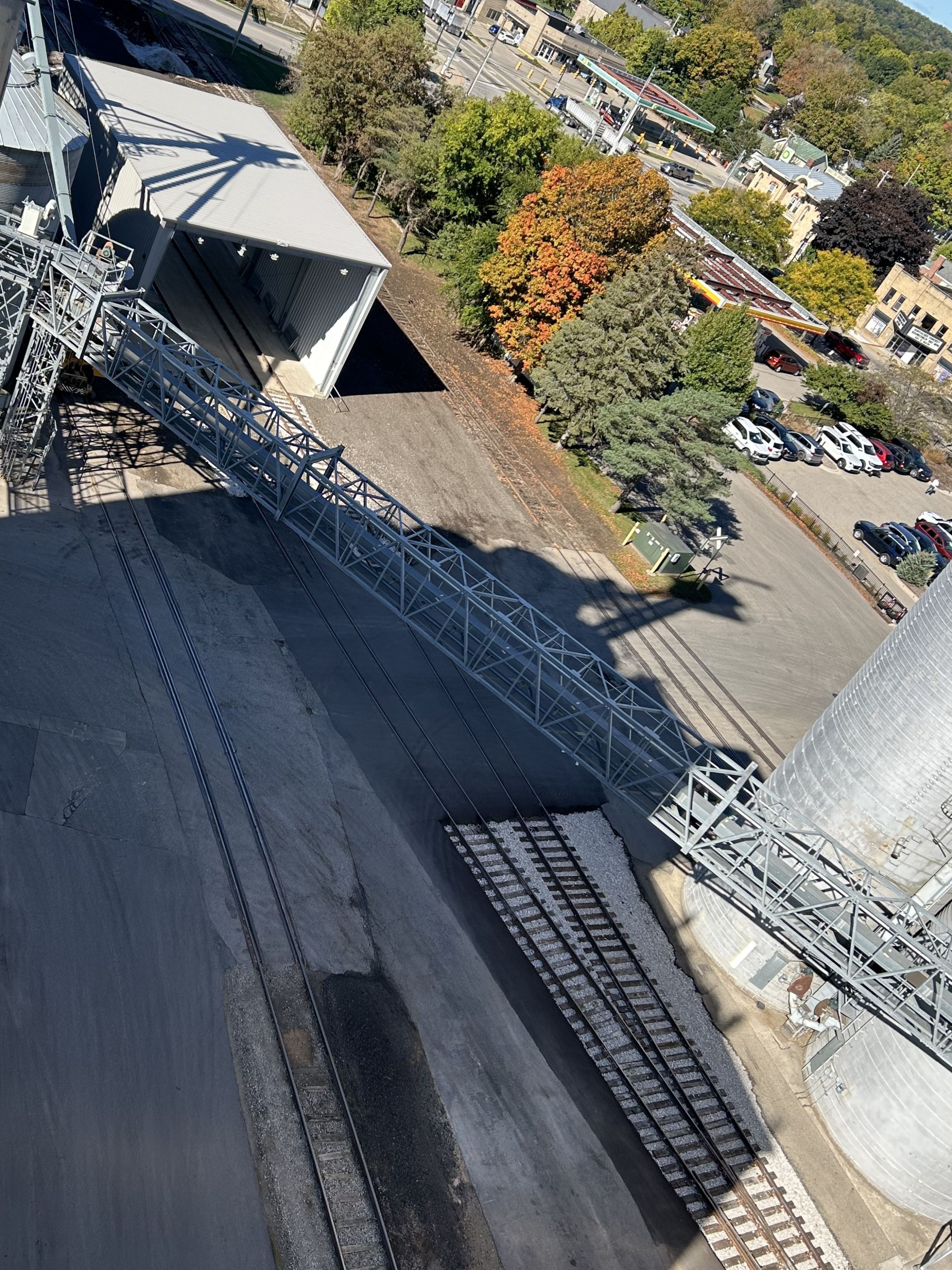
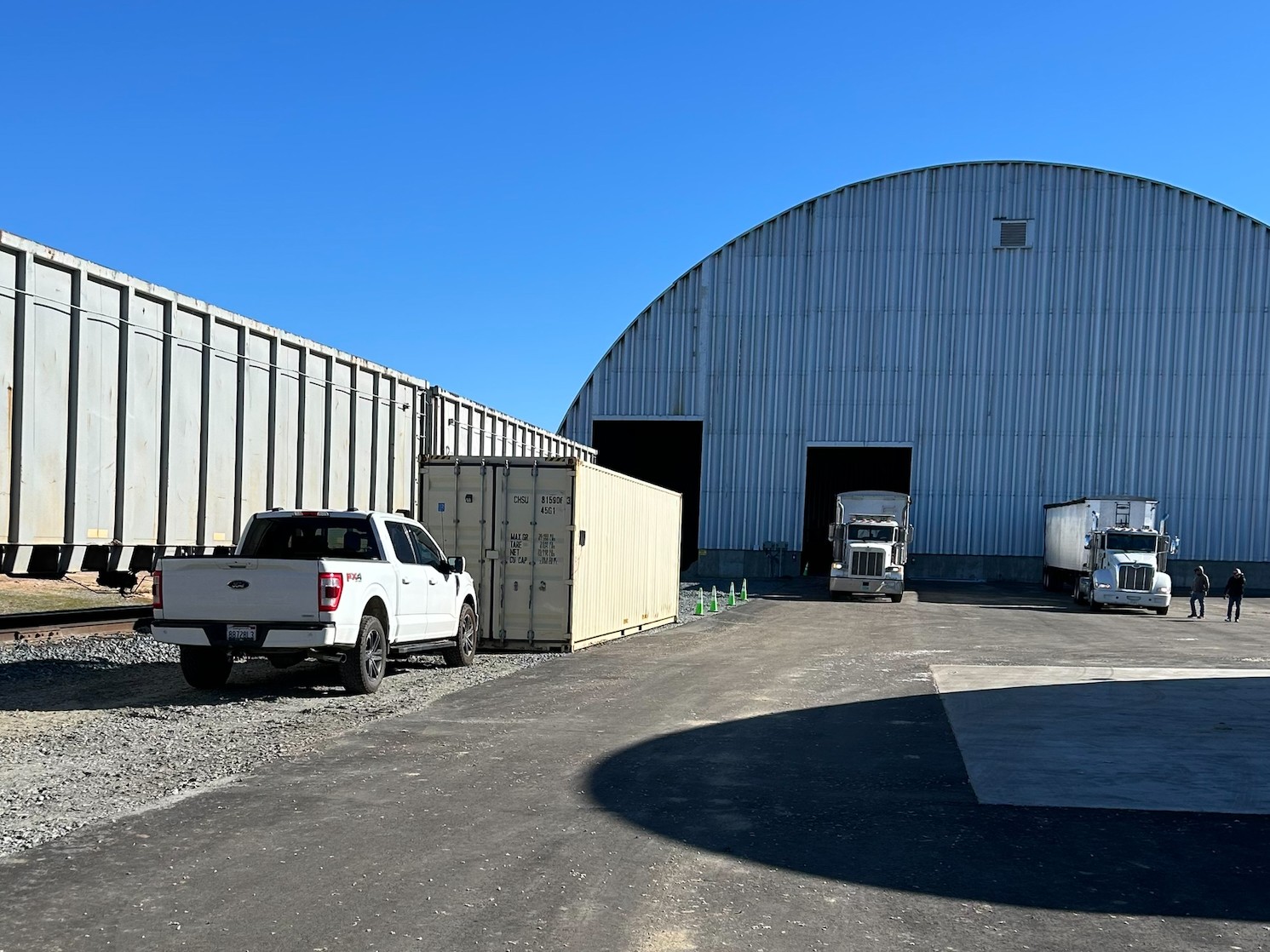
Work with customers on expansion projects – construction of new facilities for King Milling (left) and Penny Newman Grain Company (right) – brought additional business to ASLRRA members Grand Rapids Eastern Railroad and Georgia Southwestern Railroad.


There are two vacancies on the Surface Transportation Board’s (TRB) Rail Energy Transportation Advisory Committee (RETAC). The STB is calling for interested parties to submit nominations for candidates to fill these vacancies. Though there is no vacancy for a short line freight railroader, industry employees can consider nominating an interested shipper who meets all role requirements. Nominations are due Sept. 17.
One vacancy is for a representative from biofuel feedstock growers or providers and biofuel refiners, processors, and distributors. The second vacancy is for a representative from coal producers. The term for each representative is three years, ending Sept. 30, 2029.
To learn more about the vacancies and how to submit a nomination, click here.
The U.S. Department of Transportation (USDOT) has unveiled a new initiative called America’s Great Corridors of Commerce (AGCC). The goal is to fast-track deployment of co-located utility infrastructure along the nation’s highway and rail corridors, helping meet energy needs while generating revenue to support transportation investments.
The USDOT has issued a request for information (RFI) seeking comments from stakeholders and the public on the AGCC model and proposed elements of the USDOT’s planned AGCC designation process. To provide more information about the AGCC and the RFI, the USDOT will hold a live webinar on Sept. 1.
Those who might be interested in the webinar include utility companies, data centers, State departments of transportation, right-of-way owners, private investors and others. Participation is open to the public but registration is required.
ASLRRA encourages its members to learn more about this initiative by visiting the AGCC website and/or attending the Sept. 1 online webinar.
ASLRRA is evaluating the potential impact on short lines and intends to participate in the process.

Congress returns to Washington the week of Aug. 31 facing a crowded September agenda and a series of consequential decisions for the short line rail industry. With the Infrastructure Investment and Jobs Act (IIJA) surface transportation authorities and advance appropriations set to expire Sept. 30, lawmakers have only a limited window to address the impending transportation funding cliff, advance surface transportation reauthorization, and keep the federal government operating into the fall.
For short line railroads, three issues will be particularly important to watch: preserving predictable federal funding for rail infrastructure, advancing surface transportation reauthorization and modernizing the 45G Short Line Railroad Tax Credit.
Transportation Funding Cliff Tops the Agenda
The most immediate issue for short lines will be the Senate-passed continuing resolution (CR), which would fund the federal government through Dec. 11 and extend surface transportation authorities through that date. The House is expected to consider the measure when members return.
While the Senate CR provides an important extension of surface transportation authority, it does not extend the IIJA’s Division J. While other divisions of the IIJA authorize programs, Division J provides the money (budget authority) to fund them – including the advance appropriations for programs important to short lines, such as CRISI. Those advance appropriations have provided dependable, multi-year funding for many transportation programs, including federal rail programs.
Without replacement funding, the expiration of Division J on Sept. 30 would create a significant funding cliff and leave future transportation investments dependent on annual appropriations. This is particularly important for short lines because the IIJA provided unprecedented resources for the Consolidated Rail Infrastructure and Safety Improvements (CRISI) program.
Maintaining predictable federal investment is critical to keeping short line infrastructure projects moving and giving railroads, shippers and communities the certainty needed to plan long-term investments. ASLRRA is advocating for a solution that preserves guaranteed, dependable funding for CRISI and other critical transportation programs beyond the expiration of the IIJA’s advance appropriations.
Surface Transportation Reauthorization Moves Forward
The House will also continue its work on the BUILD America 250 Act (H.R. 8870), the five-year surface transportation reauthorization bill covering fiscal year (FY) 2027 through FY 2031. The House Transportation and Infrastructure Committee advanced the legislation in May, and it now awaits consideration by the full House.
The bill contains several provisions important to the short line industry, including authorization for CRISI and other federal rail programs. For ASLRRA, however, authorization alone is not enough. The industry is working to ensure that CRISI has the reliable funding necessary to support the backlog of short line infrastructure needs.
ASLRRA is also seeking improvements to the House bill, including provisions that would strengthen support for short line safety and infrastructure while opposing provisions that could increase competitive pressure on freight rail, including proposals involving heavier trucks. The reauthorization debate will ultimately determine the federal policy framework for transportation programs for the next five years, making the coming months particularly important for short lines.
45G: A Critical Tool for Short Line Investment
While CRISI provides federal grants for major rail infrastructure projects, the 45G Short Line Railroad Tax Credit helps short lines put their own capital to work. That makes modernization of 45G an equally important priority as Congress returns.
Modernizing the credit would allow short lines to put more of their own resources into track, bridge, and other infrastructure improvements. The importance of 45G is particularly clear when considered alongside CRISI. Federal grants can help finance large, transformative projects, while 45G encourages short lines and their customers to make ongoing investments in the network. Together, these tools provide complementary ways to address the industry's substantial infrastructure needs.
ASLRRA will continue working with members of Congress to advance H.R. 516 and S. 1532 and build on the bipartisan support the legislation has received.
Appropriations Remain in the Mix
Congress will also need to address FY 2027 appropriations. The outcome of the continuing resolution debate will determine how Congress approaches funding the government into the fall, while the expiration of IIJA advance appropriations will increase the importance of annual appropriations for programs such as CRISI.
For short lines, this means that both sides of the federal funding equation will be in play this fall: direct federal investment through programs such as CRISI and tax policy that encourages private investment through 45G.
What to Watch in September
September could be a consequential month for federal transportation policy. ASLRRA will continue advocating for a strong and predictable federal partnership with short line railroads — one that combines robust CRISI funding, modernization of 45G and a surface transportation reauthorization bill that recognizes the essential role short lines play in connecting American businesses, communities and the national freight network.

Know a company that would benefit from joining and participating in ASLRRA? Please contact Vice President, Membership Danialle Lovik via email or at (202) 585-3443.

Connixt brings AI-powered Smart Maintenance to short line railroads through its award-winning iMarq platform, replacing paper and clipboards with a mobile app that enables crew to complete FRA-compliant inspections, capture defects, and generate work orders even in areas with zero coverage. iMarq integrates with any back-end system, giving back-office teams the same real-time visibility and turning field data into audit-ready compliance reports and predictive insights, all while putting the right information and capabilities directly in the hands of the crews doing the work every day. Primary Contact, Alexandria David can be reached by email at alexandria.david@connixt.com.

Short line railroaders attending ASLRRA’s Fall Super Regional Meeting can come away with ideas to build their business after hearing from general session speakers representing all corners of the short line freight rail world.
Industry experts will present breakout sessions focused on business growth. Topics include:
Register today for the meeting, which takes place Oct. 5-7 in St. Louis, Missouri. Be sure to secure hotel lodging before the Sept. 10 cutoff date.
ASLRRA welcomes organizations interested in sponsoring this year’s inaugural event. Visit ASLRRA’s website to learn more or contact meetings@aslrra.org to ask questions and purchase a sponsorship.


Wi-Tronix’s comprehensive platform combines hardware, software, and cloud services for maximized fleet efficiency and reliability. Their powerful onboard platform grants unparalleled visibility into rail operations, enabling real time, data-driven decisions for peak performance.
Click here to learn more about ASLRRA’s Member Discount Program and view all available products and services, or contact ASLRRA’s Sabrina Waiss for more information about becoming a Preferred Provider.
Aug. 31, 2026: The UP/NS Transaction Amended Application: Update for Short Lines
FOR ASLRRA RAILROAD MEMBERS ONLY!
This is the third webinar in a series discussing UP and NS’s application for UP to acquire and control NS, including specific items of interest for short line railroads. Please note: we are blocking an extra 15 minutes to allow plenty of time for audience Q&A following the presentation.
Speakers include Rob Wimbish, attorney, Fletcher & Sippel, Valerie Quinn, attorney, Fletcher & Sippel, Chuck Baker, president, ASLRRA and Sarah Yurasko, SVP, law and general counsel, ASLRRA
Sept. 10, 2026: Railroad Rehabilitation and Improvement Financing (RRIF) Loans 101
This webinar will educate short lines on recent regulatory updates (specifically how upfront Credit Risk Premium [CRP] payments have transitioned to an interest rate spread), loan terms, public pipelines, and intake steps. In addition to providing an update on the overall state of the program, U.S. DOT subject matter experts will cover what can be financed, core terms, public pipelines, technical changes, and how RRIF fits into a railroad’s long-term capital planning process.
Speakers include Mike Patella, director, Outreach & Project Development, U.S. Department of Transportation; Dan Schned, deputy director, Outreach & Project Development - acting, U.S. Department of Transportation; Jake Sacks, project development lead, U.S. Department of Transportation; Will Resch, head of project development - acting, U.S. Department of Transportation
Click here to view upcoming webinars and log in to browse the On-Demand Webinar Library.
Registration is FREE for ASLRRA members! Attendance is limited to 25 participants.
ASLRRA Leadership Program: Crisis Communications Training Seminar
October 27-29, Charlotte, North Carolina
This new training seminar will help railroads prepare for their worst day by developing a communications strategy and working with key partners in advance of an incident. During the seminar, individuals or teams from a railroad will a Crisis Communications Plan and become proficient in using a Communicators Response Guide to determine the appropriate level of response based on the incident. Training will also address the role of the railroad communicator when Incident Command is in place. Attendees will return to their railroad with a communications plan that they may further refine, implement and incorporate into their railroad’s Emergency Response Plan.
Developed as a new module of ASLRRA’s Leadership Program, the crisis communications training seminar is geared to company leaders who are responsible for driving the external response to an incident on their railroad, as well as company spokespersons and communications professionals.
Click here to see additional upcoming seminars as well as event details and online registration and hotel booking links.

Six mechanical training courses, delivered in two Learning Paths, are available in the online Learning Management System (LMS) under the Short Line Training Center.
All six courses have been reviewed and approved by the Federal Railroad Administration (FRA) as Part 243 compliant, as each includes required documentation such as an on-the-job training checklist and a final assessment. The courses have been incorporated into two Learning Paths on the LMS, with each Learning Path containing three modules:
A seventh training course, Part 214 Supplemental Training, is customized for individual railroads and used to train contractors on railroad-specific on-track safety procedures and rules.
Other available courses include ASLRRA’s Part 243 model programs and FRA Drug and Alcohol Reasonable Suspicion and Post-Accident Toxicological Testing training videos. Learn more about the LMS and the Short Line Training Center here.
ASLRRA wants to share information about the autumn events its members have in store. If your railroad plans to offer special rides or participate in or sponsor community events, our communications team would love to hear about it. Send any information, links and photos to Mariel Takamura.


The New Jersey Department of Transportation (NJDOT) announced it is accepting applications for grant funding through the Fiscal Year 2027 Rail Freight Assistance Program (RFAP). The application period is open through Oct. 9.
The RFAP provides $25 million each year for capital improvement projects, covering up to 90% of the estimated cost. The emphasis is on projects that “are significant to port commerce connectivity; eliminate rail freight missing links to New Jersey’s port facilities; upgrade freight rail trackage to a 286,000-pound load carrying capacity and support a safe, efficient, and effective rail freight system in New Jersey.”
ASLRRA associate business member North Carolina Railroad Company (NCRR) has awarded another NCRR Invests grant to Great Southern Wood-NC, Inc. for rail infrastructure construction at a new lumber treatment facility.
NCRR will contribute up to $600,000 for the rail project, which will move at least 421 railcar shipments annually by 2030. Great Southern Wood-NC plans to invest $40 million in the facility, creating over 40 new full-time jobs.
ASLRRA member Alaska Railroad Corporation (ARRC) has received a grant award of up to $28.8 million through the National Railroad Partnership Program (NRPP) to help fund a bridge rehabilitation project in Matanuska-Susitna Borough, Alaska.
Over $5 billion in funding was awarded to 41 projects in 23 states. The program is meant for projects that help improve American passenger rail. ARRC’s project will extend the useful life of the MP 284.2 bridge and eliminate speed restrictions. This will keep the bridge open for both passenger and freight service.
A number of the grants will go toward funding grade crossing removals or upgrades. The North Carolina Department of Transportation received up to $299.7 million to close nine at-grade crossings on infrastructure owned by ASLRRA associate business member North Carolina Railroad Company.
Other projects will make improvements that result in benefits to both freight and passenger rail traffic.

In an article for the Eno Center for Transportation’s special edition newsletter on artificial intelligence (AI) in transportation, ASLRRA Vice President of Data, Technology and Security Fred Oelsner wrote about the use of AI in the short line freight rail industry.
Due to their smaller size, short lines rely heavily on outside vendors for certain information and operational technology. This coupled with short lines’ lighter traffic density relative to Class I railroads makes them ideal partners for testing AI technologies.
Oelsner describes several companies utilizing AI for various railroad tasks, from moving freight containers and enhancing existing monitoring systems to managing shipments and streamlining data collection and organization. He gives examples of how ASLRRA’s short line members use this technology in day-to-day operations.
Oelsner also shares how short lines use AI across their businesses, in areas such as finance, human resources and information technology. The article also touches on cybersecurity and the need for federal funding to support technology research, development and implementation.

ASLRRA maintains an industry calendar featuring events that may be of interest to members. If you have an industry event you would like included on the calendar and possibly in Views & News, please send relevant event details and links to Mariel Takamura for consideration.
The Short Line Safety Institute (SLSI) has released the annual Federal Railroad Administration (FRA) research results paper analyzing the eighteen Safety Culture Assessments (SCAs) conducted on short line, regional, passenger, commuter historic, and tourist railroads in 2025. The 2025 Systematic Review identifies industry needs that help guide the development of tools, programs and training to assist the short line industry in elevating safety culture on railroads.
“Like short line railroads, SLSI team members are committed to providing excellent service to our clients.” said SLSI Executive Director Tom Murta, Executive Director, SLSI. “In addition to offering tools and programs that help SCA participants address areas of opportunity, SLSI provides technical assistance to help short lines solve both systemic and specific challenges. We also provide follow-up coaching and check-ins, adding an extra layer of accountability and support. We look forward to introducing several new tools in the coming year to address tracking and reporting systems for safety concerns.”
Specifically, the July 2026 report identified the following areas of strength as measured by the Ten Core Elements of a Strong Safety Culture:
Across the eighteen SCAs conducted in 2025, opportunities for improvement include:
Safety culture assessments and all other SLSI training and resources are provided at no cost to the recipient. Click here to learn about or request an SCA. Visit SLSI’s website to find information about everything SLSI offers.
Views & News is published by American Short Line and Regional Railroad Association.
Please contact Mariel Takamura, associate editor, with questions or comments.


