
Grant kickoff puts Appalachian and Ohio Railroad repairs on track in West Virginia
Historic railcars to join Adirondack Railroad fleet
Systems thinking: RDC's Ida Posner bridges the worlds of rail and environmental philanthropy
Railroad members! If you want to be featured in this section, please email us the link. You can also tag us (@ASLRRA) in your social media posts. Interested in seeing your railroad showcased in your local newspaper? Contact Amy Krouse for assistance.
As one of the most environmentally efficient modes of land transportation, railroads play a critical role in reducing the environmental impact of freight movement. Louisville & Indiana Railroad Company (LIRC) recognizes that environmental responsibility extends beyond moving goods by rail. Through investments in energy efficiency, sustainable infrastructure, emissions reduction technologies, recycling initiatives and customer-focused innovation, LIRC has incorporated environmental stewardship into many aspects of its operations. These efforts demonstrate the railroad’s commitment to continuous improvement and responsible resource management while maintaining safe and efficient service.
LIRC has taken significant steps to improve energy efficiency throughout its facilities and vehicle fleet. The railroad purchases hybrid vehicles when replacements are needed and enforces a strict anti-idling policy to reduce fuel consumption and emissions. Through grant-funded projects, LIRC installed 204 solar panels on three facilities and implemented additional improvements across its shops, offices and rail yards. Building upgrades, including enhanced insulation, energy-efficient heating and cooling systems and smart thermostats, help reduce energy usage. The railroad has transitioned to high-efficiency LED lighting throughout its properties, utilizing occupancy sensors to minimize electricity consumption in unoccupied areas.
A commitment to environmental responsibility is reflected in LIRC’s comprehensive waste management and recycling programs. In addition to meeting applicable regulatory requirements, the railroad actively recycles office waste, electronic waste, ferrous and non-ferrous metals and locomotive batteries. Waste fluids, railroad ties, and other materials are recycled whenever practical or disposed of properly when recycling options are unavailable.
To further improve sustainability, LIRC has increasingly utilized copper naphthenate-treated (QNAP) railroad ties in place of traditional creosote-treated ties. More than 32,000 QNAP ties have been installed across various projects, providing both environmental benefits and simplified end-of-life disposal because they are not currently classified as hazardous waste.
LIRC has focused on reducing fuel consumption and emissions through locomotive modernization. The railroad recently replaced 160 fuel injectors across 11 diesel prime movers with Interstate McBEE ECOTIP Superstack Injectors. These upgrades reduced fuel consumption by approximately 3%, decreased smoke opacity by 75%, and lowered particulate emissions by 44%.
Additionally, grant funding secured in partnership with the American Lung Association enabled the installation of HotStart Auxiliary Power Units (APUs) on all locomotives. These units consume only 0.4 gallons of diesel fuel per hour compared to more than eight gallons during conventional locomotive idling. As a result, LIRC reduced annual fuel consumption by more than 150,000 gallons during the first year of operation.
Additional locomotive technologies further support LIRC’s sustainability goals. Five locomotives are equipped with Wi-Tronix ZTR automatic start-stop systems that monitor engine performance and optimize idling, engine utilization and APU operation. The railroad also uses environmentally friendly soy-based wheel lubricants to reduce wheel flange wear and rolling resistance. In locations requiring additional friction management, LIRC has installed top-of-rail lubrication systems that utilize environmentally preferable lubricants, improving both operational efficiency and equipment longevity.
Beyond its own operations, LIRC works collaboratively with customers and industry partners to improve overall supply chain efficiency and environmental impact. Through CedarAI’s ARMS platform, customers receive enhanced visibility into inbound and in-transit shipments, allowing them to identify delays, improve planning, and streamline logistics operations. LIRC also participates in Operation Clean Sweep, an industry initiative focused on preventing plastic resin releases into the environment and mitigating environmental impacts associated with transportation incidents.
LIRC’s environmental achievements demonstrate that meaningful sustainability improvements can be achieved from a comprehensive and integrated approach rather than a single initiative. Through investments in renewable energy, energy-efficient facilities, advanced locomotive technologies, recycling programs, sustainable track materials and collaborative customer solutions, the railroad continues to reduce its environmental footprint while enhancing operational efficiency. These measurable results illustrate that even a smaller railroad can serve as a leader in environmental stewardship and demonstrate that size is not a barrier to achieving significant sustainability success.
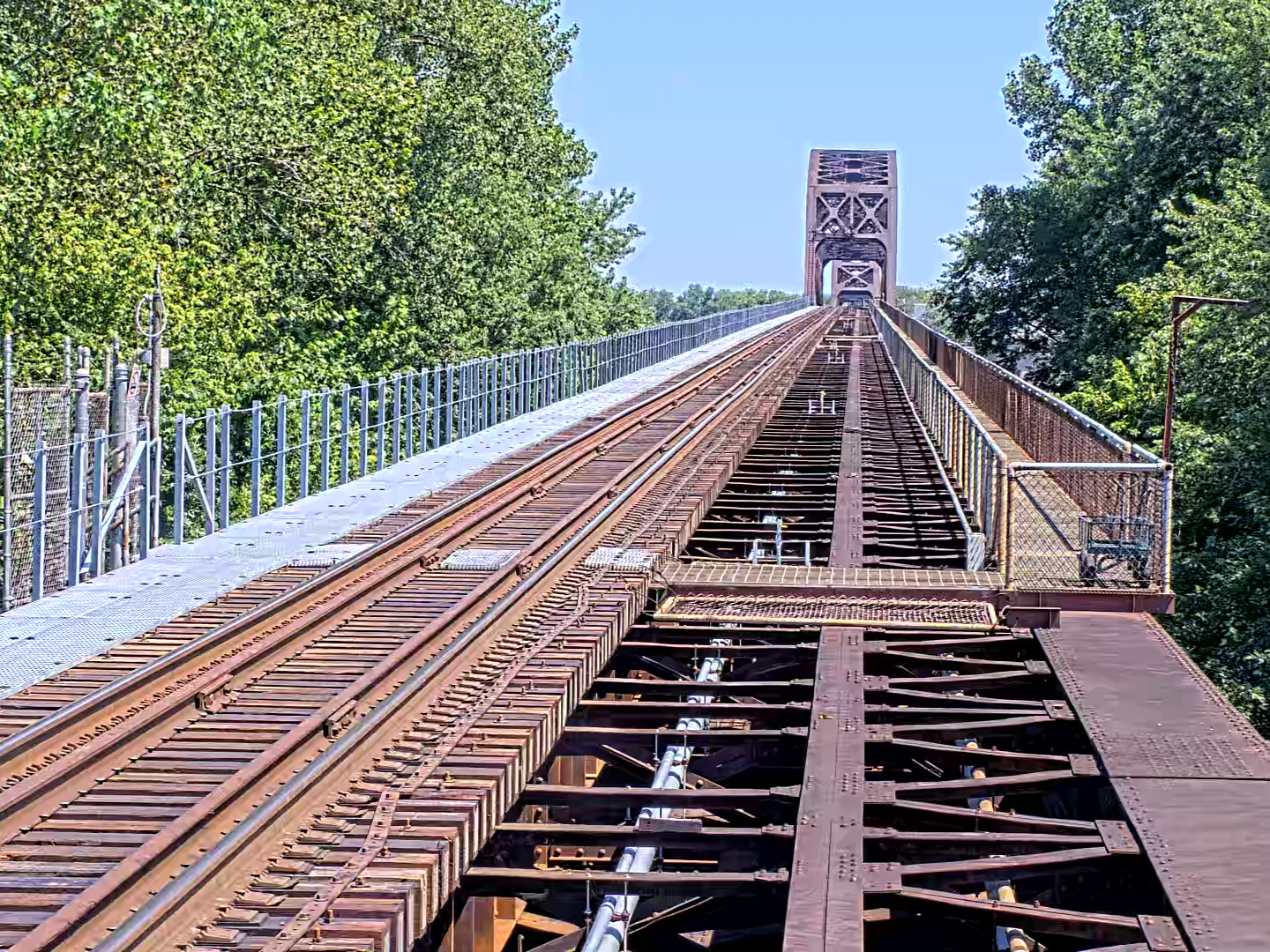
ASLRRA member Louisville & Indiana Railroad Company (LIRC) is increasingly using copper-naphthenate-treated (QNAP) railroad ties in place of traditional creosote-treated ties as part of its efforts to further improve sustainability. LIRC has installed over 32,000 QNAP ties across various projects, including here on the Ohio River Bridge.
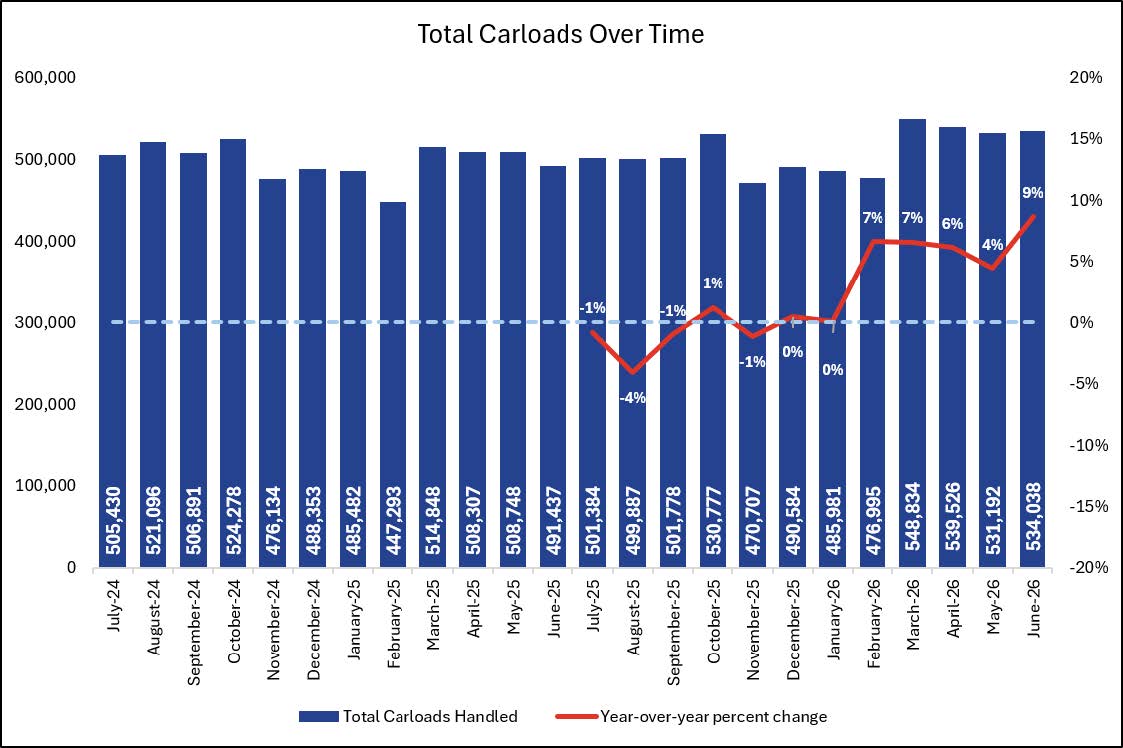
ASLRRA has published the most recent Short Line Carloads Report.
Carload movements in June 2026 were up over May, and significantly up over June 2025. This is also the first time since the publication of this report began that bridge movements increased in year-over-year (YOY) comparisons. The report notes all movement types saw a measurable increase compared to 2025.
In June 2026 the commodities that grew the most were petroleum, agriculture and consumer goods. There were no YOY decreases for any commodity group listed in the report.
Carload data is based on a custom short line carload report created in cooperation between ASLRRA and Railinc based on waybill data submitted by railroads. This work product may not be disseminated without permission granted by ASLRRA. Contact ASLRRA at foelsner@aslrra.org for all inquiries.


The Surface Transportation Board has published a procedural schedule for consideration of the Union Pacific (UP) and Norfolk Southern (NS) merger application. The proceeding and the environmental review are no longer in abeyance, or paused.
The STB’s decision, issued yesterday, notes the board finds the record now sufficient to resume the procedural schedule for public comment. In a press release, the STB emphasizes that this decision does not constitute any ruling on the merits of the application or any other issues raised or motions filed. The procedural schedule, with projected dates, can be viewed here.
Parties wanting to participate in the proceeding as official Parties of Record must file a notice of intent to participate by Sept. 4. Comments on the revised application are due Nov. 18, and responses to comments are due Feb. 16, 2027. The STB will hold a public hearing, the date of which is still to be determined.
ASLRRA is evaluating this news. The Association plans to participate in the merger proceeding and will provide members with guidance soon on how to file a notice of intent to participate (NOI).
The STB has provided a full listing of its decisions related to this proceeding on its UP-NS Merger Resources page, found here.
ASLRRA joined the American Public Transportation Association (APTA) and the Association of American Railroads (AAR) in submitting comments supporting a Federal Railroad Association (FRA) proposed rule to rescind a rulemaking requiring dispatcher certification program implementation. ASLRRA, APTA and AAR also submitted comments supporting the FRA’s proposal to rescind its signal employee certification rule.
In comments about both the dispatcher certification rule and signal employee rule, the associations note the record demonstrates that dispatcher and signal employee certification is not necessary to improve safety; expected benefits do not justify the expected costs; and both 2024 final rules would impose duplicative and unworkable burdens without meaningful incremental safety gains. The associations urge the FRA to finalize the recission of both rulemakings, 49 CFR – Part 245 and Part 246, in their entirety.
In other news, the Surface Transportation Board (STB) announced a new final rule titled Changes to Delegations, Docket No. EP 789. The rule is effective Sept. 17.
Some of the changes highlighted in an STB press release discussing the rule include clarification and expansion of delegations of authority to the STB’s chief counsel. The rule also establishes new delegations of authority to the chief of passenger rail and investigations (COPRI) and codifies the STB’s grant-stamp process for uncontested, routine matters.
According to the STB, “The revisions in today’s decision align the Board’s regulations with current practices, consolidate delegations following recent organizational changes, and support the Board’s goal of improving procedural efficiency.”
Because these revisions affect internal agency organization, the process was exempt from the Administrative Procedure Act’s notice-and-comment requirements. Interested parties can download the decision document here.
The Federal Railroad Administration (FRA) has published more research and technical reports, several of which may be particularly interesting to members.
Two track buckling prevention modules are presentations for a training course that provides an overview of continuous welded rail (CWR) management. Track Buckling Prevention and Improved Rail Stress Management (Module 1) reviews CWR fundamentals, defines problems related to track buckling and covers safety concepts and best practices for buckling prevention. Track Buckling Prevention and Improved Rail Stress Management (Module 2) is focused on improved CWR maintenance practices including managing rail neutral temperature (RNT).
Track Geometry Predictions Using Point and Segment Processing discusses the initial investigation into the most appropriate methods for forecasting foot-by-foot track geometry data. The research identified two models that can help predict the future behavior of track geometry and help plan preventative maintenance more effectively. The next step is to complete case studies applying these methods.
Other reports include:

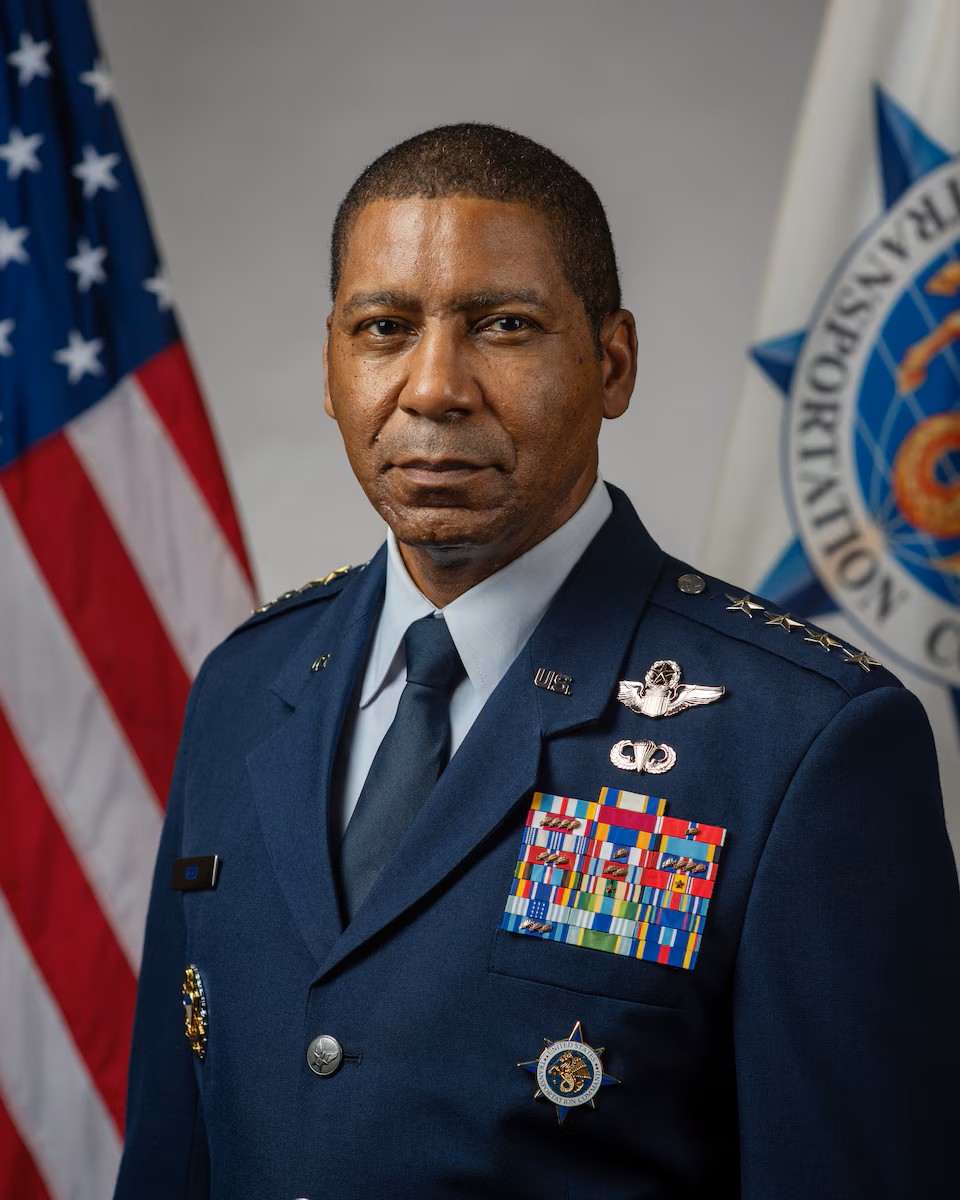
Earlier this month, ASLRRA welcomed General Randall Reed, commander, U.S. Transportation Command (USTRANSCOM), for a meeting at the Association’s Washington, D.C. office to discuss the short line freight rail industry.
During the meeting, ASLRRA staff provided Gen. Reed an overview of the short line industry. They also described how the Association coordinates with federal agencies on rail safety, cybersecurity and infrastructure funding.
The group talked about Gen. Reed’s mission and goals for USTRANSCOM and how short lines can support that mission. There was also discussion about how USTRANSCOM can spread the word about the importance of short line railroads and the way they help keep the nation safe from kinetic and non-kinetic threats.
ASLRRA member parent company R. J. Corman Railroad Services is continuing its legislative outreach efforts with another lawmaker visit and participation by President and CEO Justin Broyles in a transportation and infrastructure roundtable.
On Monday, Representative Brett Guthrie (R-Ky.), chairman of the House Energy and Commerce Committee, visited R. J. Corman’s South Union Distribution Center. Discussion centered around how the distribution center supports the aluminum supply chain and how connection to the R. J. Corman Memphis Line supports manufacturing and economic development in the region.
R. J. Corman team members also thanked Guthrie for his support of short line railroads, which includes being a cosponsor of H.R. 516, the short line infrastructure tax credit modernization bill.
Then, at a roundtable hosted by Representative Andy Barr (R-Ky.) on Aug. 14, Broyles spoke about infrastructure priorities, freight mobility and economic growth. U.S. Transportation Secretary Sean Duffy also joined the group, as did other Kentucky transportation and business leaders.
During the discussion, Broyles explained how short line railroads play a critical rule in connecting businesses to the national freight rail network. He also advocated for continued investment in freight rail infrastructure to help strengthen supply chains and make rail shipping even safer and more efficient.
ASLRRA encourages its members to connect with their elected officials and invite them to tour railroad facilities and rail-served sites. These in-person visits are an invaluable opportunity to build positive relationships and bring short line issues to life for lawmakers. Contact the Association’s government affairs team for assistance reaching out to officials or advice on planning a visit.

ASLRRA’s Fall Super Regional Meeting, held Oct. 5-7 in St. Louis, Missouri, will offer a wider variety of dynamic, engaging and informative education sessions thanks to a format that combines all four regions, the Finance & Administration Seminar and the General Counsel Symposium.
Industry experts will present education sessions that will feature some of the newest technology, such as AI, being implemented on short line railroads including:
Register today before the next registration rate increase on Aug. 21. Be sure to secure hotel lodging before the Sept. 10 cutoff date.
ASLRRA welcomes organizations interested in sponsoring this year’s inaugural event. Visit ASLRRA’s website to learn more or contact meetings@aslrra.org to ask questions and purchase a sponsorship.

MaxAccel provides innovative, best-of-class web and mobile-based software solutions to drive safety, regulatory compliance and operational efficiency. Over 220 freight railroads, passenger operations and railroad contractors rely on MaxAccel’s suite of AssetPro™ and SafeTrack™ applications every day making them some of the most widely used in the rail transportation industry.
Click here to learn more about ASLRRA’s Member Discount Program and view all available products and services, or contact ASLRRA’s Sabrina Waiss for more information about becoming a Preferred Provider.
Sept. 10, 2026: Railroad Rehabilitation and Improvement Financing (RRIF) Loans 101
This webinar will educate short lines on recent regulatory updates (specifically how upfront Credit Risk Premium [CRP] payments have transitioned to an interest rate spread), loan terms, public pipelines, and intake steps. In addition to providing an update on the overall state of the program, U.S. DOT subject matter experts will cover what can be financed, core terms, public pipelines, technical changes, and how RRIF fits into a railroad’s long-term capital planning process.
Speakers include Mike Patella, director, Outreach & Project Development, U.S. Department of Transportation; Dan Schned, deputy director, Outreach & Project Development - acting, U.S. Department of Transportation; Jake Sacks, project development lead, U.S. Department of Transportation; Will Resch, head of project development - acting, U.S. Department of Transportation
Click here to view upcoming webinars and log in to browse the On-Demand Webinar Library.
There are three in-person training seminars remaining in 2026, focused on leadership development, crisis communications and locomotive and car compliance. Interested participants are urged to register early to secure their spots in these events.
Follow each link above to learn more about each seminar and register. The leadership regulatory module and Part 215 seminar are eligible for ASLRRA scholarships. A very limited amount of funding remains available for 2026. Click here to learn more about scholarships and submit an application.

ASLRRA plans to participate in the Faces of Freight social media campaign, highlighting the individuals who help the nation’s freight network grow and thrive.
Member company employees are invited to share personal stories about their experiences as freight workers. These stories will be shared in ASLRRA communications published during Faces of Freight week, Sept. 1-7. Communications may include, but are not limited to, an article in Views & News and social media posts.
Anyone interested in submitting their personal stories for consideration can fill out an online form here. All submissions are due by Aug. 25. Contact Mariel Takamura with questions.
ASLRRA wants to share information about the autumn events its members have in store. If your railroad plans to offer special rides or participate in or sponsor community events, our communications team would love to hear about it. Send any information, links and photos to Mariel Takamura.


ASLRRA maintains an industry calendar featuring events that may be of interest to members. If you have an industry event you would like included on the calendar and possibly in Views & News, please send relevant event details and links to Mariel Takamura for consideration.
Operation Lifesaver, Inc. (OLI) has published its ENS Sign Awareness Day Report, showcasing the highlights of the day’s activities and the reach of the campaign’s message.
June 24, 2026 marked the second-annual observance of ENS Sign Awareness Day. The day brings together OLI and its partners to help the public understand what the blue and white Emergency Notification Systems (ENS) sign is, know where to find it at a rail crossing and how to use it when there is an emergency on railroad tracks.
According to OLI, ENS Sign Awareness Day reached millions of people across the country through in-person events, online engagement and traditional media and news reports. Earned media placements led to a potential audience reach of 77.6 million, while across social media OLI’s ENS Sign Awareness Day messaging was seen on 422,445 screens, a 99% year-over-year increase.
In addition to sharing data, OLI’s report includes photos from ENS Sign Awareness Day participants and screenshots of social media posts sharing information about the blue and white sign.
Views & News is published by American Short Line and Regional Railroad Association.
Please contact Mariel Takamura, associate editor, with questions or comments.


