It’s no secret that older locomotive models are generally a railroad’s primary source of emissions and are also very expensive to replace. That dual reality makes it a challenge to reconcile a desire for cleaner, more efficient operations with the fact that you can’t run a railroad without a locomotive.
It’s especially challenging for small railroads looking to improve efficiency and reduce fuel consumption and cost. Procuring higher-tier locomotives can have the most positive environmental impact but is often the most difficult to achieve.
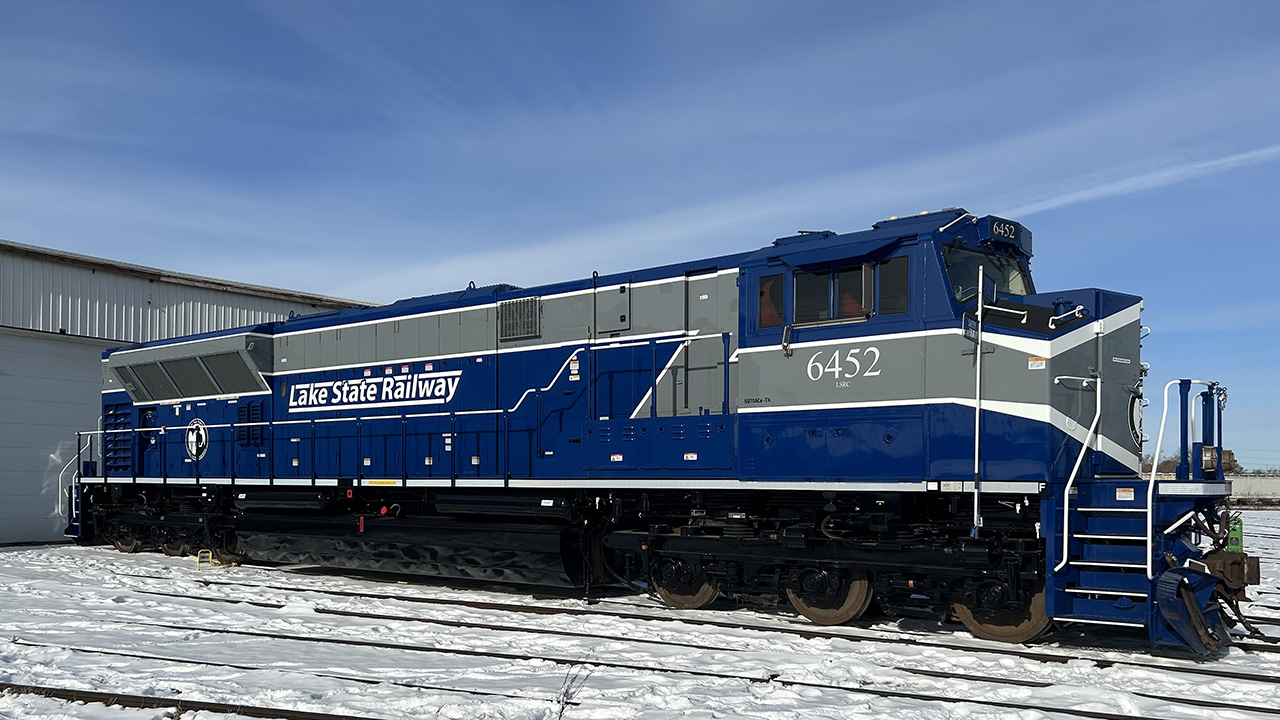
The winner of the 2026 Green Spark Award for environmental achievement, Lake State Railway (LSRC), took a huge leap forward in this area with the recent purchase of four SD70ACe-T4 locomotives from Progress Rail. The acquisition allowed LSRC to retire five locomotives that were over 40 years old, transforming the railroad’s fleet into one of the youngest and most environmentally friendly in the short line industry.
Along with being more fuel efficient, these new tier 4 units, which are also LSRC’s first AC traction locomotives, will enable the railroad to reduce the total number of locomotives needed on several key long-haul routes.
Although buying new units is a significant accomplishment for LSRC, they have taken other steps to reduce their environmental impact. When it is not possible or cost-effective to procure a higher-tier locomotive, railroads can use other technology to improve efficiency.
LSRC continually adds idle-reduction technology to its fleet, installing automatic engine shut down/start up systems (AESS), auxiliary power units (APUs) and plug-in technology. These systems work in different ways to reduce the amount of time the locomotive engine must be kept idling, which helps reduce fuel and engine maintenance costs, extend engine life and decrease harmful emissions.
LSRC even works to take care of its locomotives in an efficient way, keeping its large locomotive facility warm during the winter by using a heating system powered by the railroad’s waste oil. And this commitment to recycling extends to the rest of the company. LSRC has a proactive recycling program for all materials and disposes of used railroad ties at a cogeneration facility, also known as a combined heat and power plant, which converts biomass and other organic waste into energy. LSRC also uses best practices and proactively manages waste and pollution via third-party consultants and a full-time properties manager.
Environmental efforts do not stop at the gates of LSRC property. The railroad is active in national environmental initiatives, in part as a member of the Environmental Protection Agency’s (EPA) SmartWay Program. SmartWay Carrier Partners take advantage of sustainability accounting and tracking tools to improve efficiency and environmental performance, and LSRC is one of only a handful of ASLRRA members to be a part of the program independent of a large holding company.
LSRC Chief Mechanical Officer Roger Fuehring has also been active with environmental initiatives on the national level, working with the EPA to write regulatory compliance guides for railroads. Fuehring has also advised development of current and potential emissions regulations to help ensure they are effective and realistic.
Overall, LSRC’s accomplishments, both big and small, demonstrate a commitment to reducing the environmental impact of its operations without compromising service and growth. Their effort truly shows size is no barrier to impact.
Hear more about the project from Roger Fuehring, Chief Mechanical Officer, LSRC:


